Science

India's NVS-03 navigation satellite completes first orbit manoeuvre

ISRO says the third next-generation NavIC satellite is healthy after its first planned engine burn and will undergo more manoeuvres before reaching its final slot.

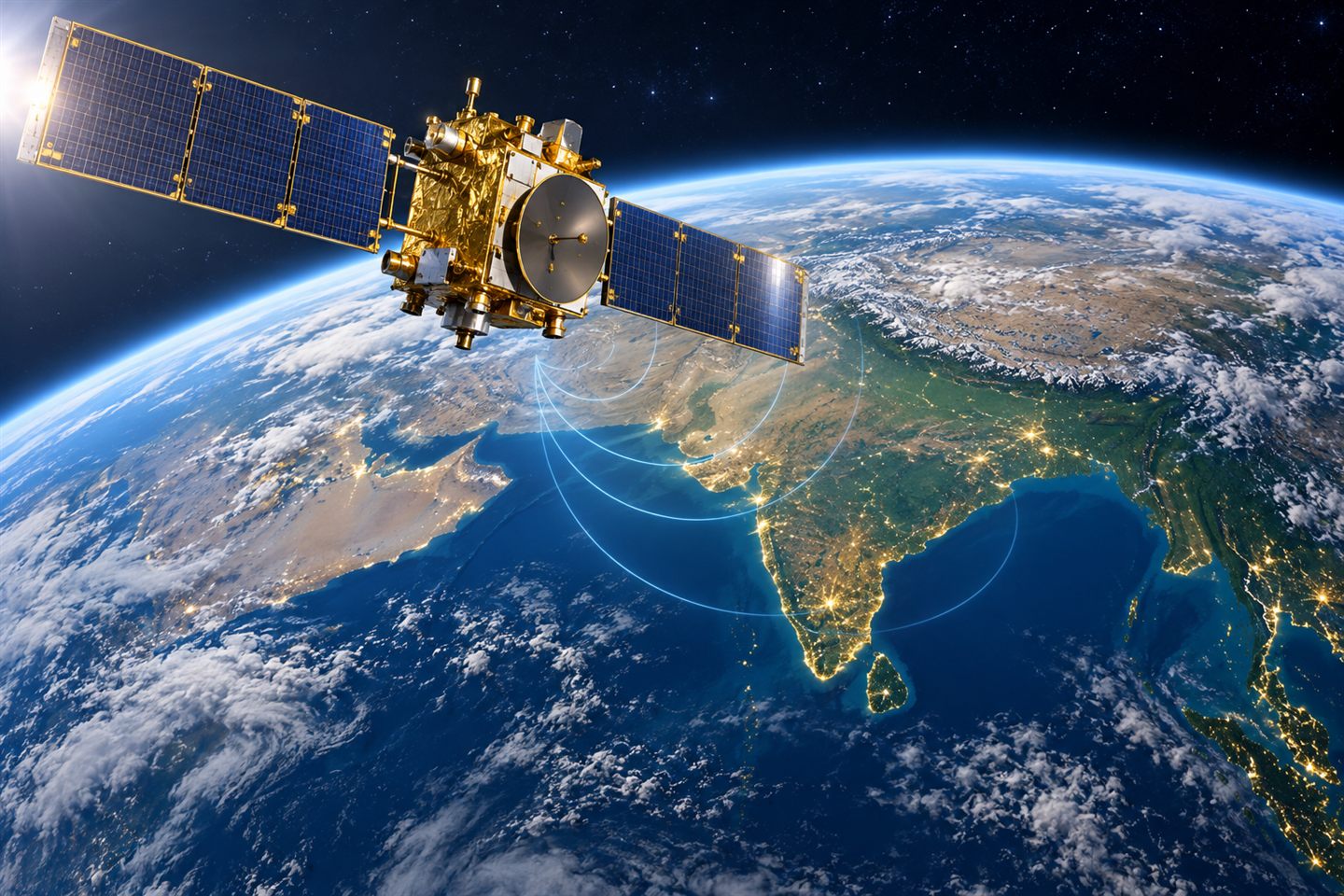
An original illustration of a navigation satellite orbiting above India
Original News Polite editorial illustration; it is not an exact rendering of the NVS-03 spacecraft.

India's NVS-03 navigation satellite has completed its first planned orbit-raising manoeuvre and remains healthy, the Indian Space Research Organisation said. The spacecraft is the third satellite in the next generation of the country's NavIC navigation system.

A GSLV rocket placed NVS-03 into an initial 170.3 km by 38,080 km transfer orbit at 11:51 pm on October 30. ISRO said the first liquid-apogee-motor burn lasted 2,174.8 seconds on October 31, producing an estimated orbit of 5,477.6 km by 37,833.4 km.

What happens next

The satellite has not yet reached its final operating location. ISRO plans additional manoeuvres to place it in a geosynchronous orbit at 111.75 degrees east. Each engine burn changes the shape or orientation of the orbit until the spacecraft reaches the intended slot.

NVS-03 carries an Indian atomic clock alongside procured clocks. Precise clocks are central to satellite navigation because receivers calculate position from the travel time of signals sent by multiple spacecraft.


Expanding NavIC capability

The satellite transmits L1 signals in addition to L5 and S-band services. ISRO says the system is designed to cover India and a region extending about 1,500 kilometres beyond the country's boundary.

NavIC supports positioning, navigation and timing services. Potential uses include transport, mapping, emergency response and timing for infrastructure, although the real-world availability of particular features also depends on compatible receivers and the health of the wider constellation.

The successful first manoeuvre is an important early milestone, not the end of commissioning. ISRO will need to complete the remaining orbit operations and in-orbit checks before the satellite can be treated as fully operational.

Sources

News Polite rewrites and contextualises reports in its own words. Links are provided so readers can inspect the underlying reporting and primary material.

← Back to the homepage